

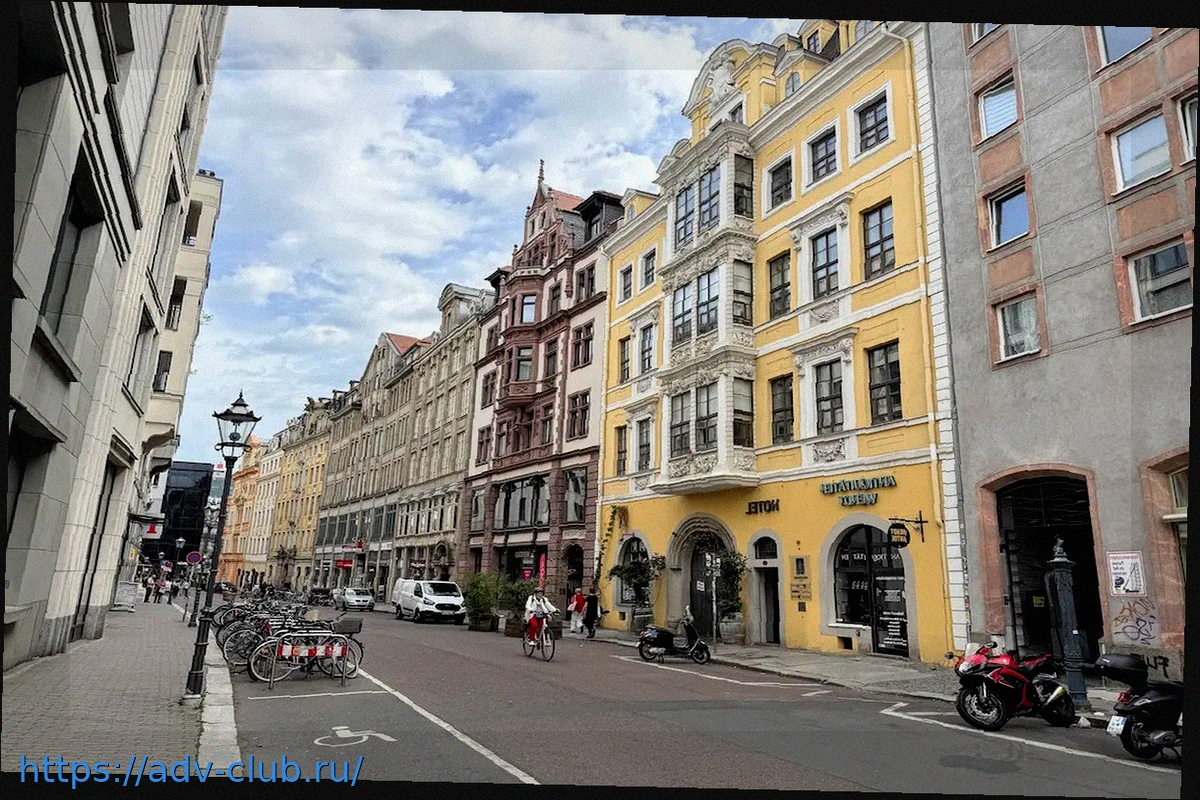
Johann Sebastian Bach lived in Leipzig 300 years ago, but you will still encounter the famous composer on almost every corner of this German city. From monumental statues and the historic churches for which he composed music, to the Bach Archive, his portraits in local museums, and the very locations where he once lived and worked. Even today, Bach remains omnipresent in Leipzig, his music echoing through the streets. From regular concerts organised across the city to classical music playing from the speakers at the main train station, Bach’s timeless compositions provide the perfect soundtrack to your visit.
Johann Sebastian Bach Locations in Leipzig
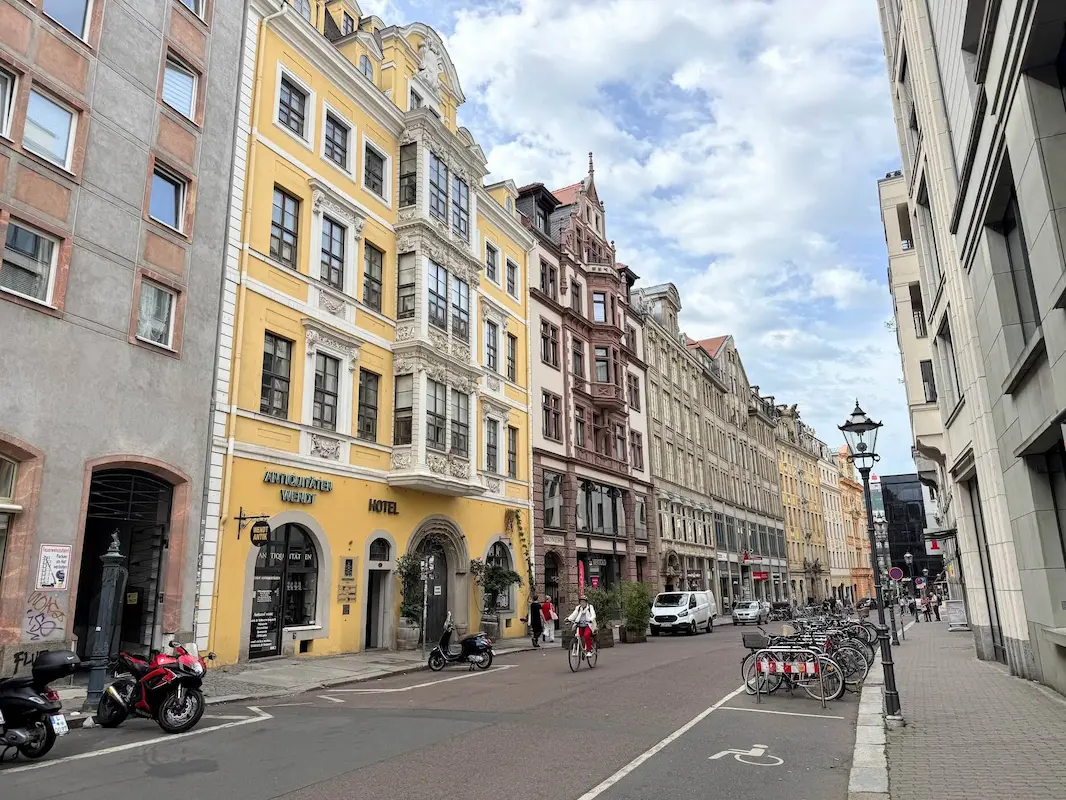
Born in 1685 into a well-known musical family, Johann Sebastian Bach went on to become its most famous member. He began his musical education as a young boy, dedicating his entire life to it.
Although he only left Germany once in his lifetime, he was a true traveller at heart. He once walked more than 200 kilometres just to hear a famous musician perform. After working for various courts and churches across Germany, Bach accepted the position of music director in Leipzig in 1723, remaining there until his death in 1750.
His role was immensely demanding. Appointed as the Thomaskantor (the director of church music in the city of Leipzig), he was responsible for the music in four of the city’s major churches. He was also required to teach schoolboys at the St. Thomas School and compose a brand-new piece of choir music every single week.
Though he is considered one of the greatest composers of all time today, he wasn’t actually the city’s first choice for the job. It was only after Georg Philipp Telemann and Christoph Graupner rejected the offer that Leipzig extended it to Bach. At 38 years old, recently married to his second wife, he arrived to the city with a loud household filled with children.
⤷ Read more: The Man Behind the Masterpiece – Johann Sebastian Bach
1 – Start at the Bach Museum
Address: Thomaskirchhof 15/16, 04109 Leipzig
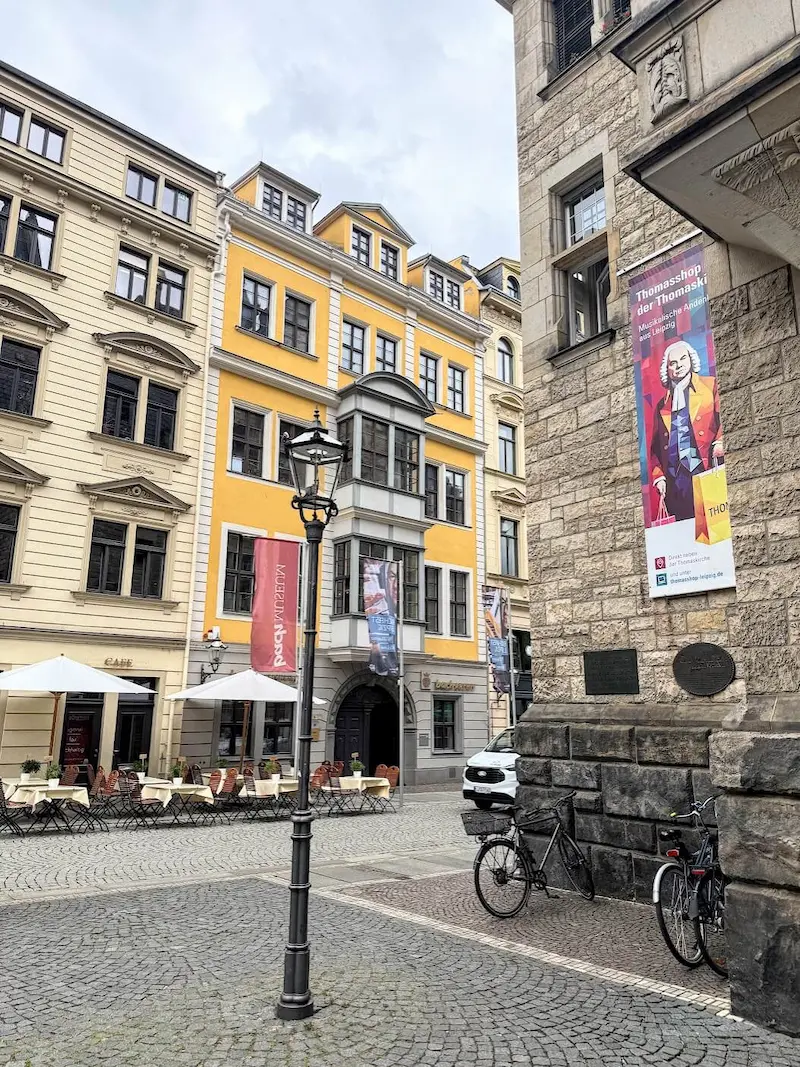
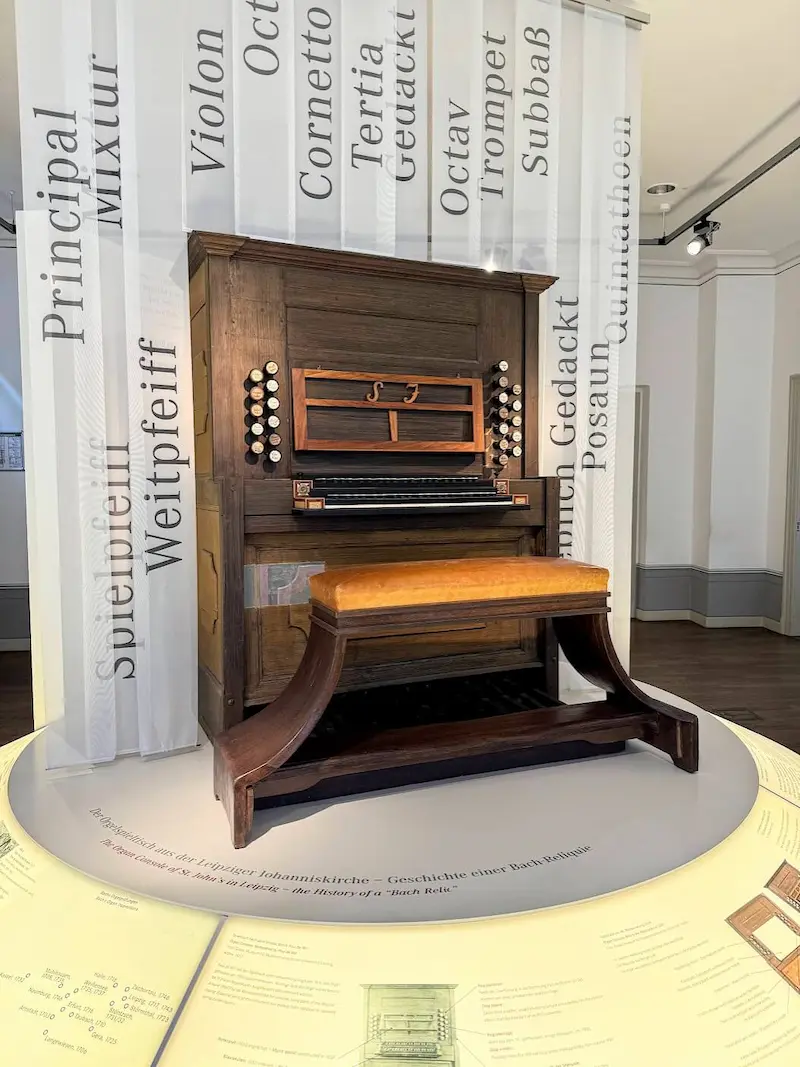
A great place to begin your search for Bach in Leipzig is the Bach Museum. It is located in a beautiful townhouse built during the Baroque period that originally belonged to the Bose family. Because they were close friends of the Bach family, the famous composer was likely a frequent guest. Its striking yellow facade transports you straight back to the late Baroque era, while its tranquil garden offers a glimpse into the lifestyle of wealthy Leipzig citizens during Bach’s time.
A look at his extensive family tree displayed at the museum reveals just how deeply music was engraved into his genes. I especially loved seeing the authentic period instruments and the interactive exhibits, which allow you to listen to their unique sounds and understand how they shaped Bach’s compositions.
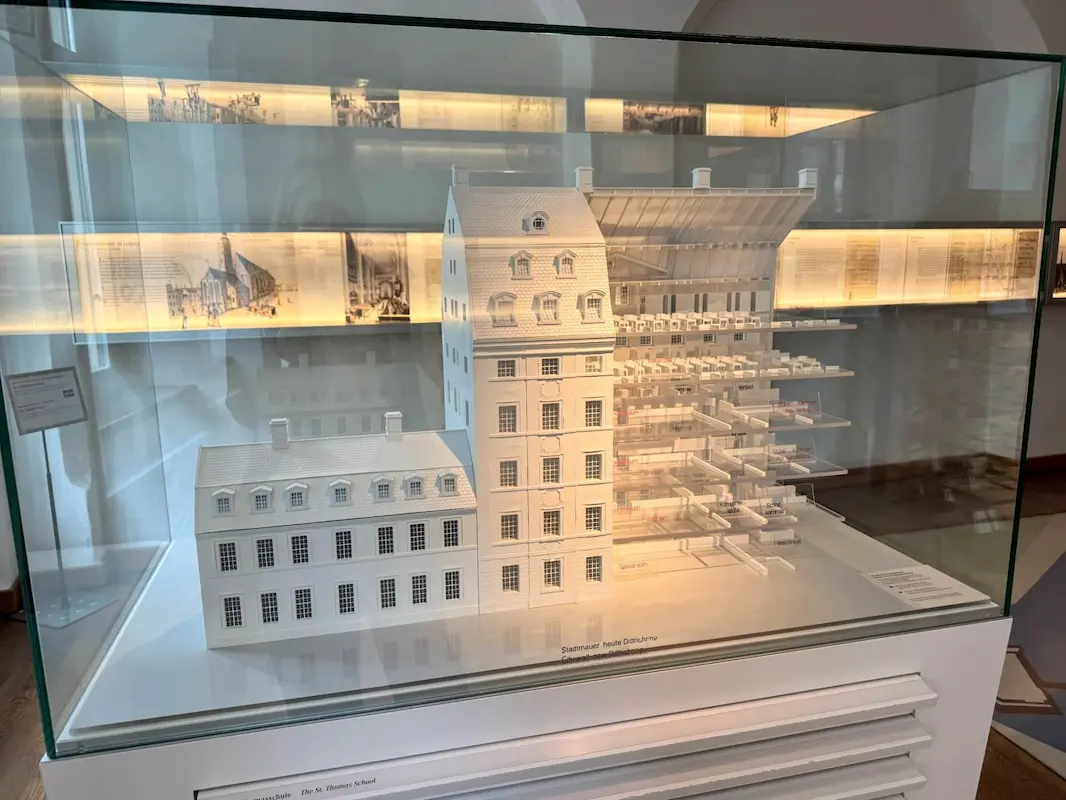
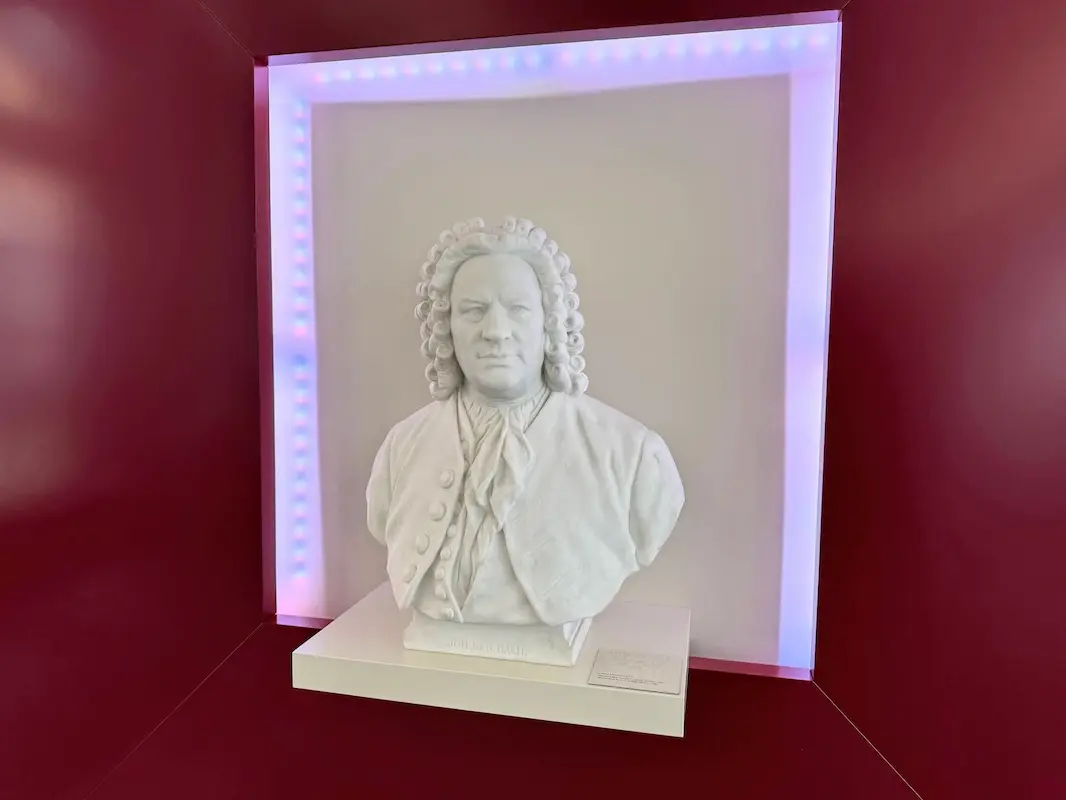
Naturally, a big section of the museum focuses on Bach’s career in Leipzig. While he is celebrated today purely for his music, an essential part of his daily job was teaching Latin and music at the St. Thomas School. As Thomaskantor, he lived with his family at the St. Thomas boarding school, occasionally taking overnight shifts to supervise the boys. With his large family, the small apartment grew cramped and noisy. It was hardly the ideal environment for concentration, yet his creativity flourished nonetheless. It is so interesting to dive deeper into that part of his musical career at the museum.
The museum also houses one of the earliest original painted portraits of Johann Sebastian Bach. In the museum’s Treasure Room you can see rare artefacts from his life. From original manuscript fragments and documents to historical prints and drawings, these treasures bring you face-to-face with the legendary composer.
⤷ TIP: The museum shares its space with the Bach Archive, making it a great stop if you want to research more into his work.
2 – The Statue of J. S. Bach in Leipzig
Address: Thomaskirchhof 12, 04109 Leipzig
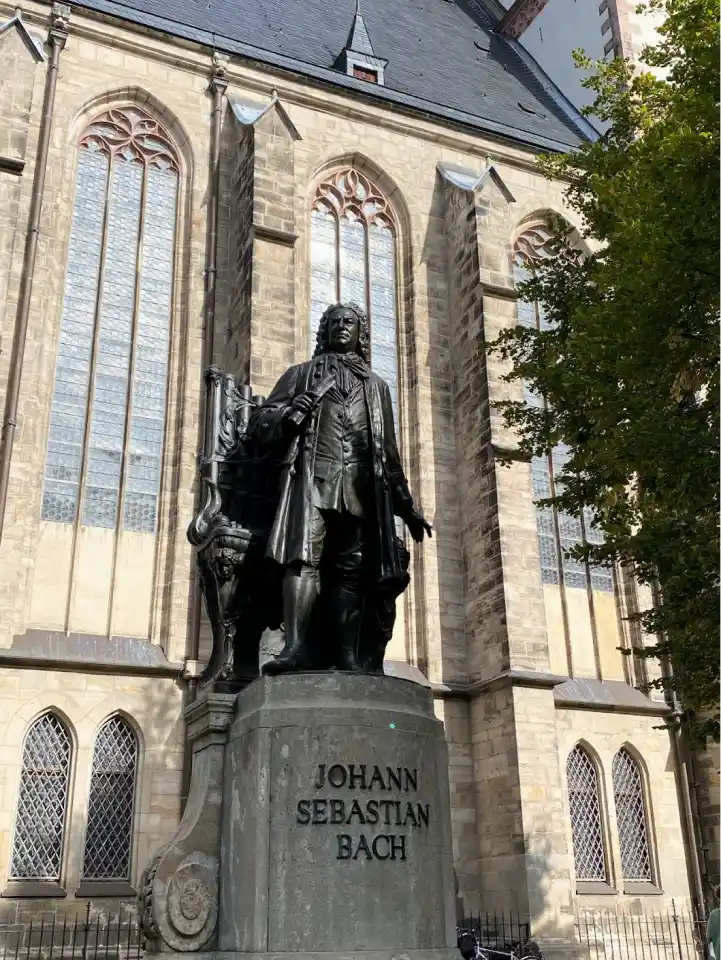
Symbolically erected in a small square right between the Bach Museum, St. Thomas Church, and the former site of the St. Thomas School, this statue is a place you shouldn’t miss during your search for locations linked to Bach in Leipzig. Bach spent a big portion of his daily life right here. Standing in this spot, it is easy to imagine the composer rushing past to oversee the condition of the musical instruments in one of Leipzig’s churches.
The statue was made by Carl Seffner in 1908, in the Baroque revival style to highlight the time when the famous composer lived. It depicts Bach standing proudly in front of an organ, holding a rolled musical score in his right hand. On the back of the organ, you will find a bas-relief of the old St. Thomas School building, which was demolished six years before the statue was unveiled.
⤷ Read more: Things to Do in Leipzig – Germany’s City of Music
3 – St. Thomas Church
Address: Thomaskirchhof 18, 04109 Leipzig
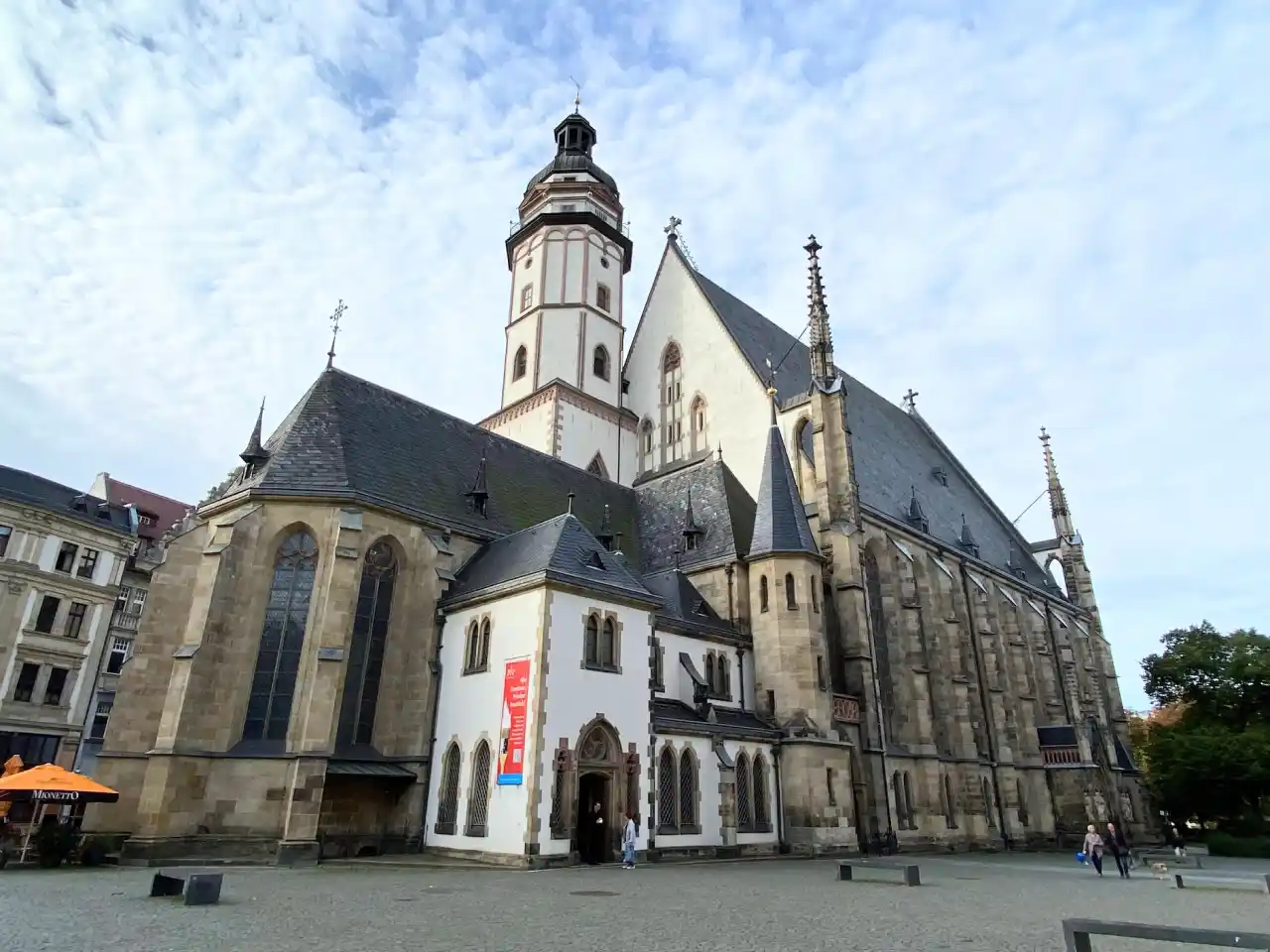
St. Thomas Church (Thomaskirche) is an absolute must-visit for anyone interested in learning more about Bach’s life in Leipzig and the history of Western classical music in general.
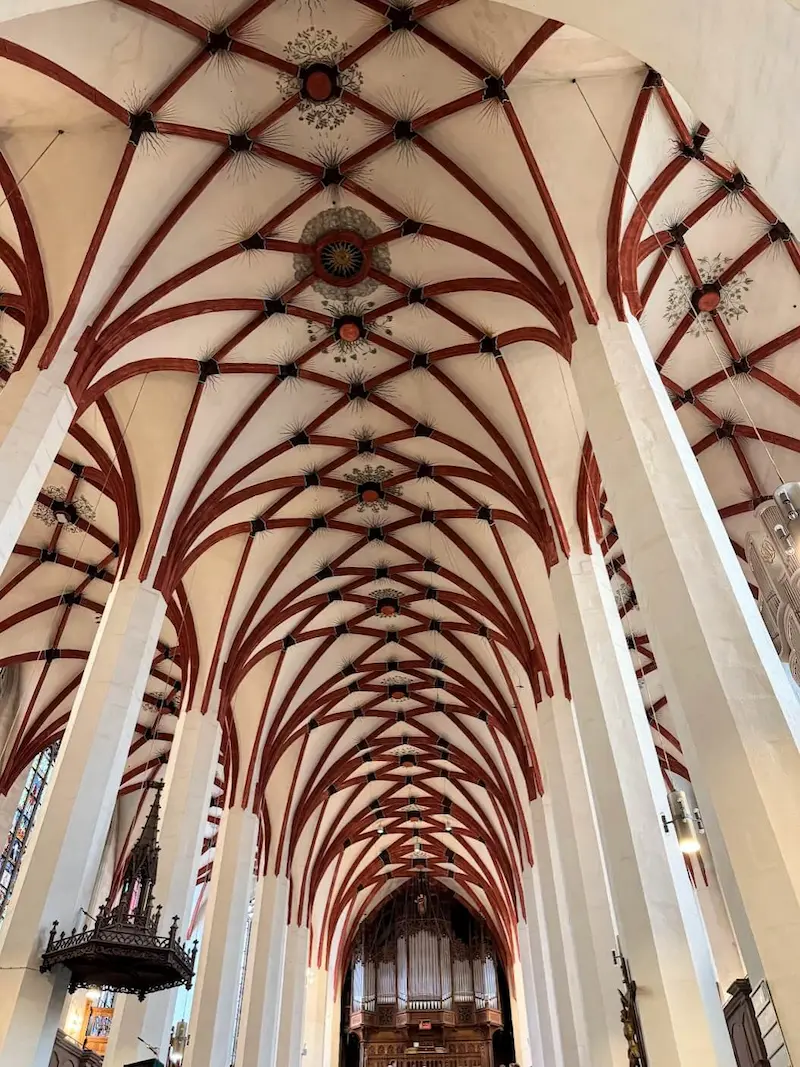
A church has stood on this site since at least the 13th century, though today’s structure is predominantly Gothic. Especially interesting is the vaulted ceiling with ribs painted in red. During the Reformation, the church converted and remained a Lutheran house of worship today.
The church has a strong link to music. Since 1212, St. Thomas Choir of Leipzig (Thomanerchor), one of the oldest and most prestigious boys’ choirs in Germany, has performed here. Wolfgang Amadeus Mozart played the church organ during one of his European tours in 1789. Richard Wagner was baptised here in 1813, later studying under one of the Thomaskantors.
The church’s interior had much more of the Baroque decoration during Bach’s time. However, these were removed during the Gothic revival in the late 19th century.
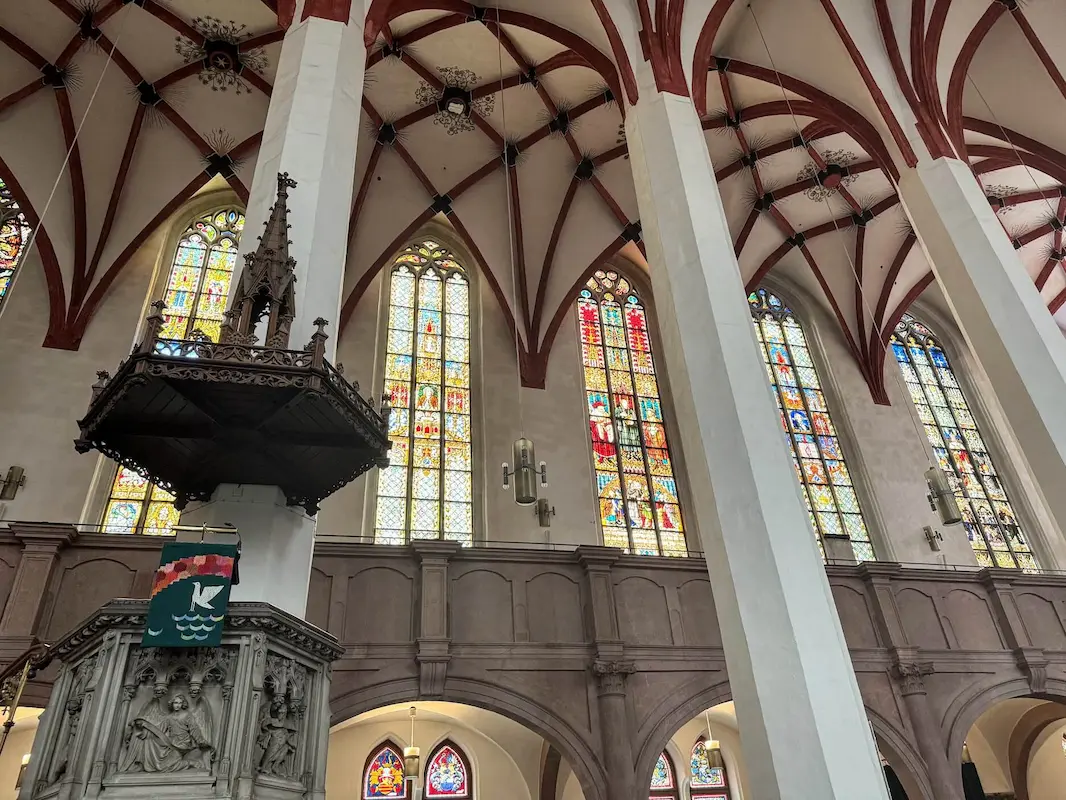
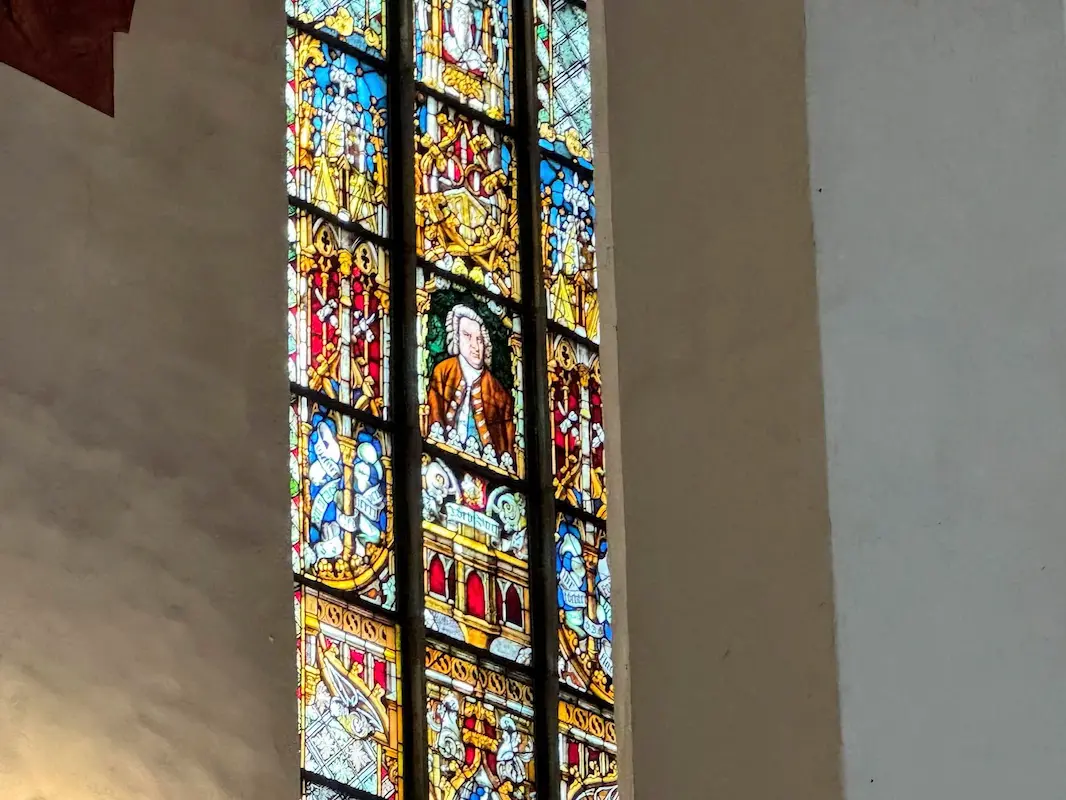
Stained-glass windows were added after 1889, and you can easily recognise Johann Sebastian Bach depicted in one of them. The window directly adjacent honours a person who was also quiet important to Bach: Martin Luther. Though they lived two centuries apart, there would be no Bach without Luther.
Martin Luther preached here in 1539, making it a pivotal moment that led to Leipzig embracing the Reformation. The Bach family was deeply devout, and Luther’s teachings heavily influenced the composer. Luther revolutionised the liturgy not only by introducing the German language (instead of Latin) but also because he made music an important part of the Lutheran liturgy. From that point on, church cantors held an important role. As a deeply religious man, Bach used his cantatas and sacred music to express both his profound faith and his musical genius.
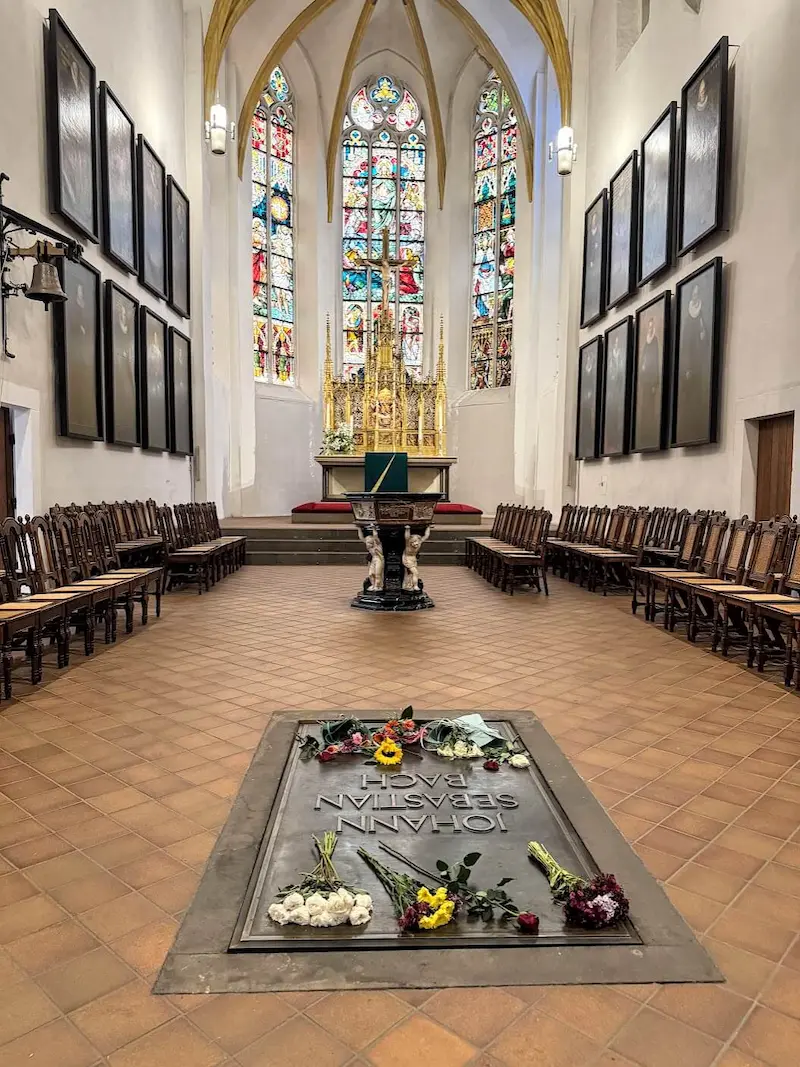
When he passed away in 1750, Bach was originally buried at St. John’s Church in Leipzig. During the renovations in 1894, his grave was discovered and identified. After St. John’s Church was destroyed by bombings during World War II, his remains were safely transferred to a newly designed Bach’s grave in the sanctuary of St. Thomas Church in 1950.
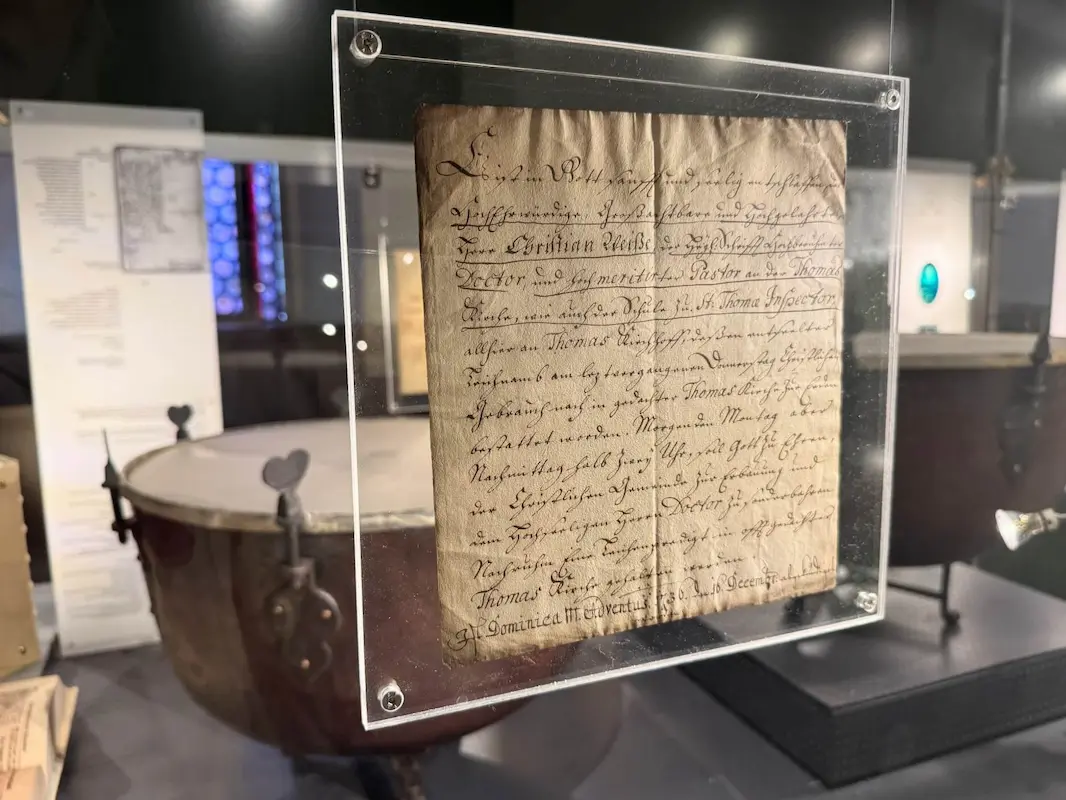
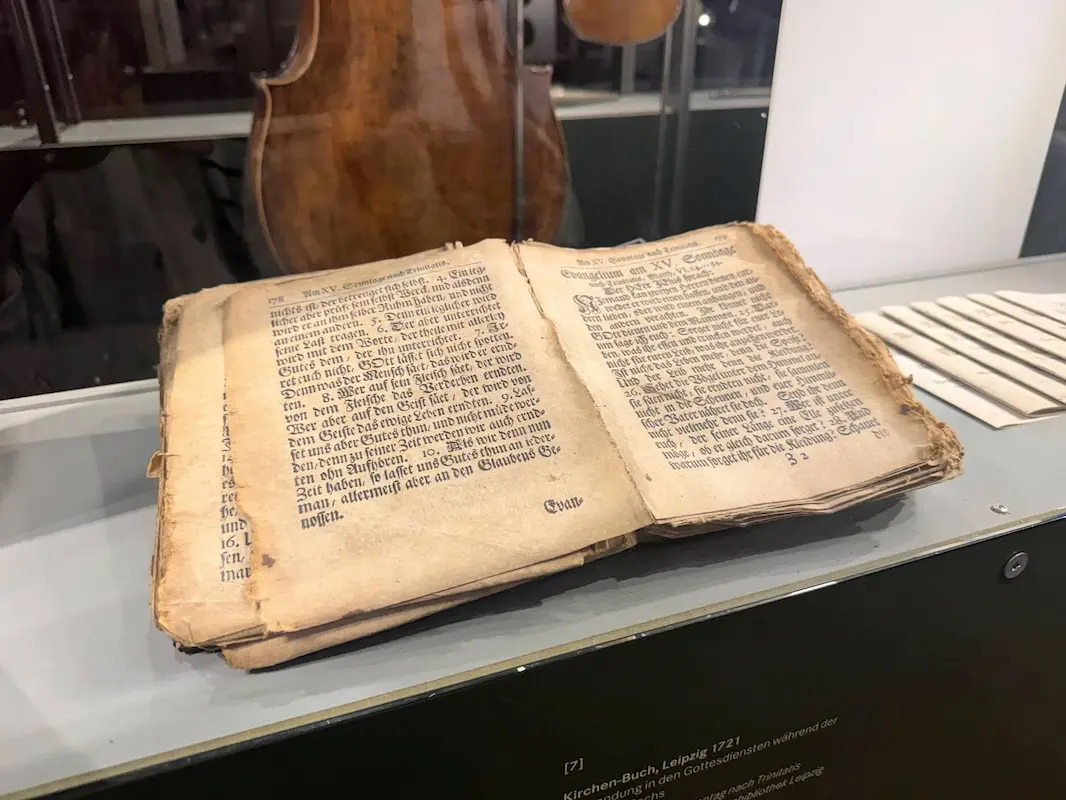
The church also hosts a tiny exhibition dedicated to Bach and church music, located in the old sacristy near the entrance closest to the sanctuary. Here, you can see historic books, documents, and instruments that were used during Bach’s lifetime.
⤷ TIP: The absolute best way to experience Bach’s enduring spirit inside St. Thomas Church in Leipzig is by attending some of the live musical performances (read more about them later in the article).
4 – The Old Bach Monument
Address: Dittrichring, 04109 Leipzig
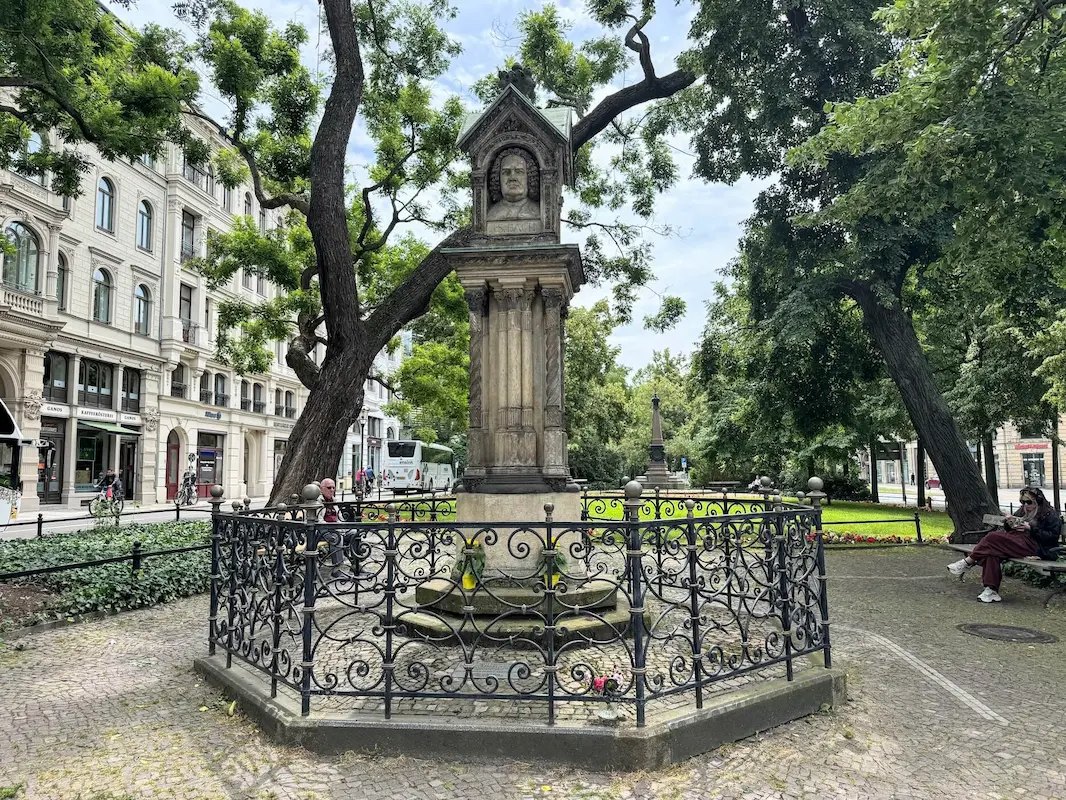
The statue mentioned above isn’t the only one dedicated to the composer you’ll find in this German town. Just a few steps away, nestled in a quiet green space, stands the Old Bach Monument. Erected in 1843, this is not only the oldest monument to Bach in Leipzig, but the very first dedicated to him anywhere in the world.
The monument was gifted by another famous musician linked to Leipzig, Felix Mendelssohn Bartholdy, who was the director of the Leipzig Gewandhaus Orchestra at that time. In many ways, we owe Bach’s modern fame to Mendelssohn, who famously revived interest in the composer after Bach’s work had fallen into relative obscurity. Mendelssohn conducted a series of concerts between 1840 and 1843, using the proceeds to fund the monument and covering the remaining costs from his own private fortune.
⤷ TIP: In the same park, directly opposite the Old Bach Monument, you will find a statue dedicated to Felix Mendelssohn Bartholdy himself.
5 – Leipzig City History Museum
Address: Rathaus Markt 1 04109 Leipzig
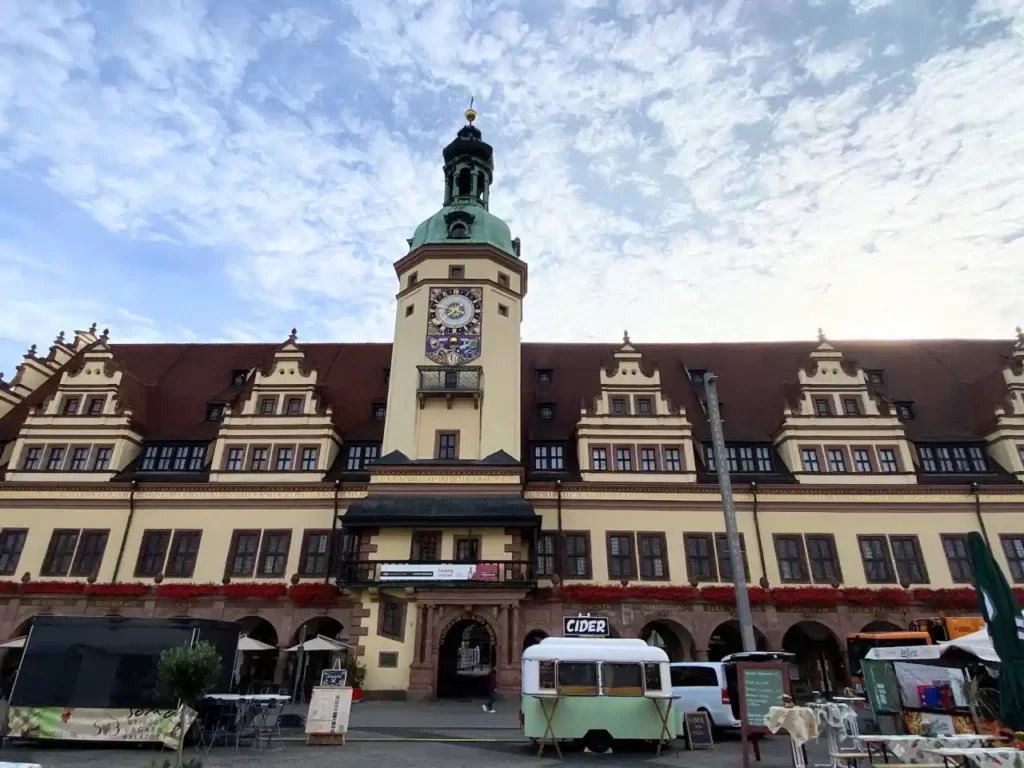
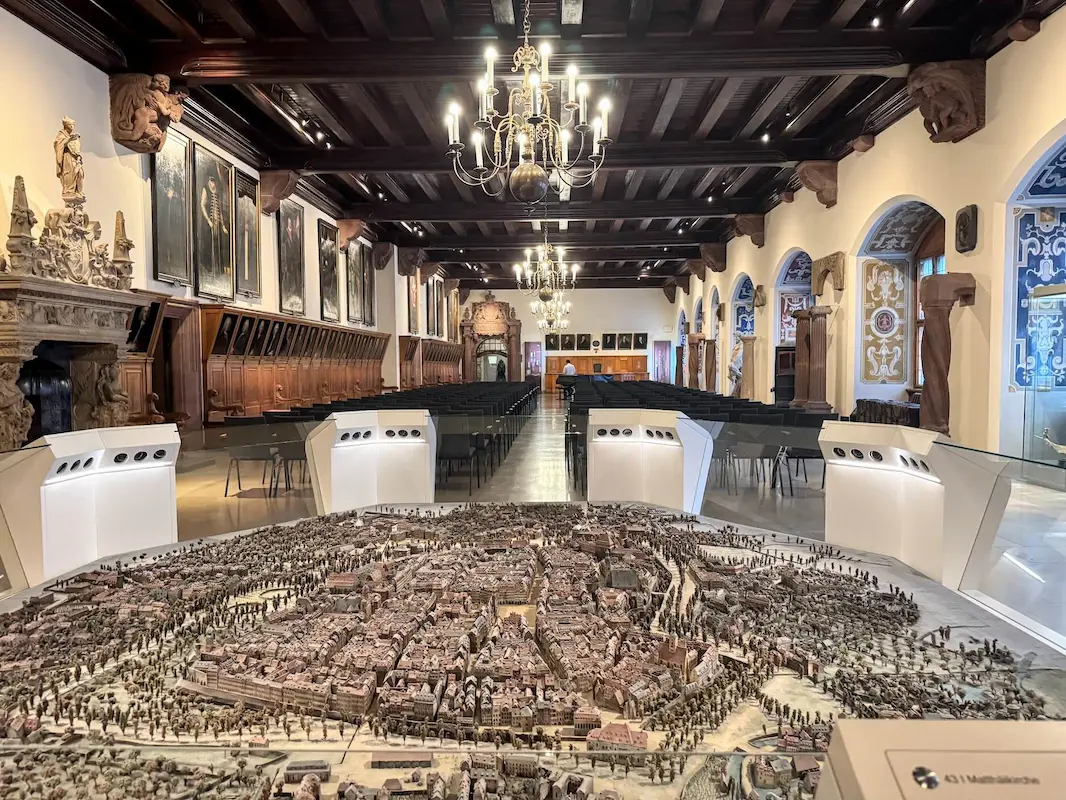
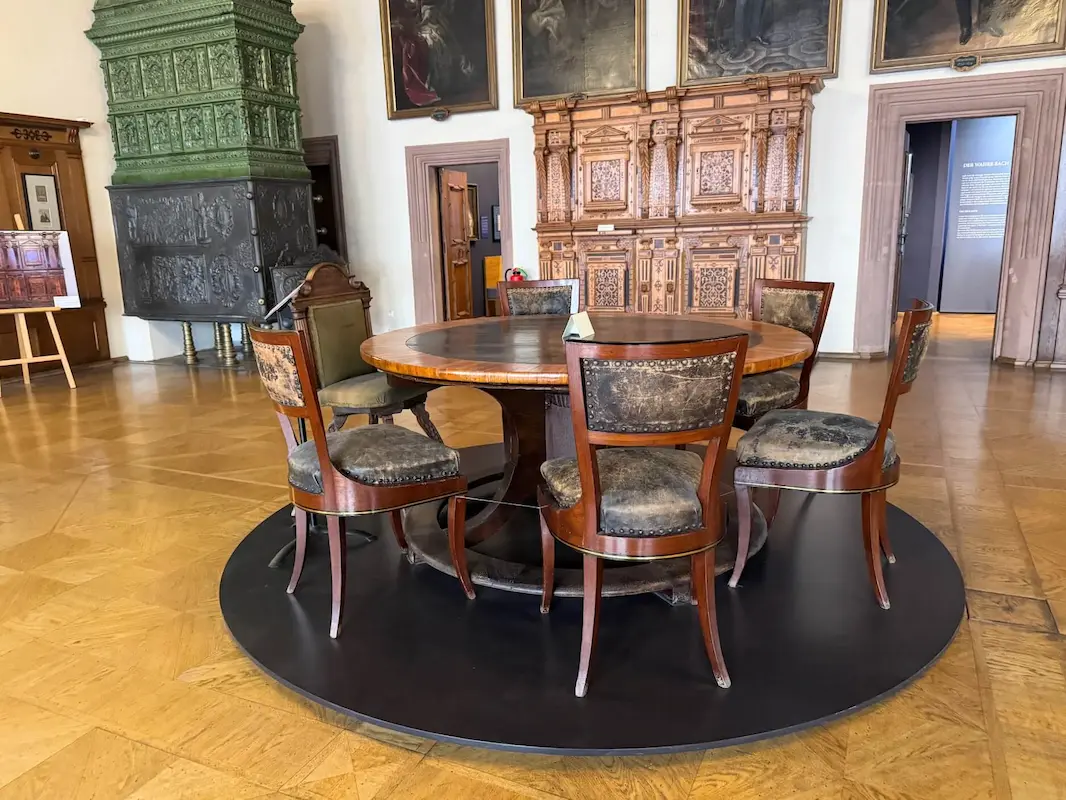
Located on the bustling Markt Square, Leipzig’s Old Town Hall (Altes Rathaus) was built in the mid-16th century in the Renaissance style. Bach likely walked past its grand facade almost every day. We also know for a fact that he stepped inside of it because it was in the Council Chamber here that he signed his official employment certificate as Thomaskantor in 1723. You can still visit that historic room today and see the very table where he set to sign the document.
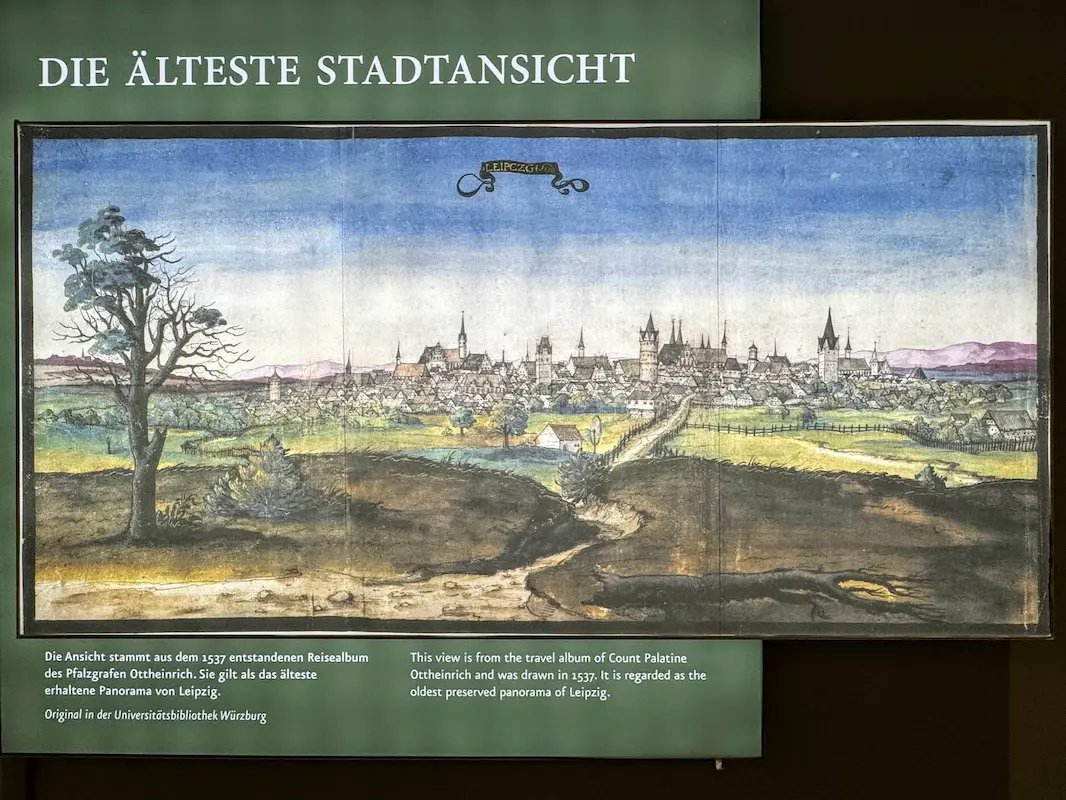
Today, the Old Town Hall houses the Leipzig City History Museum. Its permanent collection chronicles the story of Leipzig from the Middle Ages onward, offering fantastic context on what the city looked like during the 18th century and introducing you to Bach’s contemporaries.
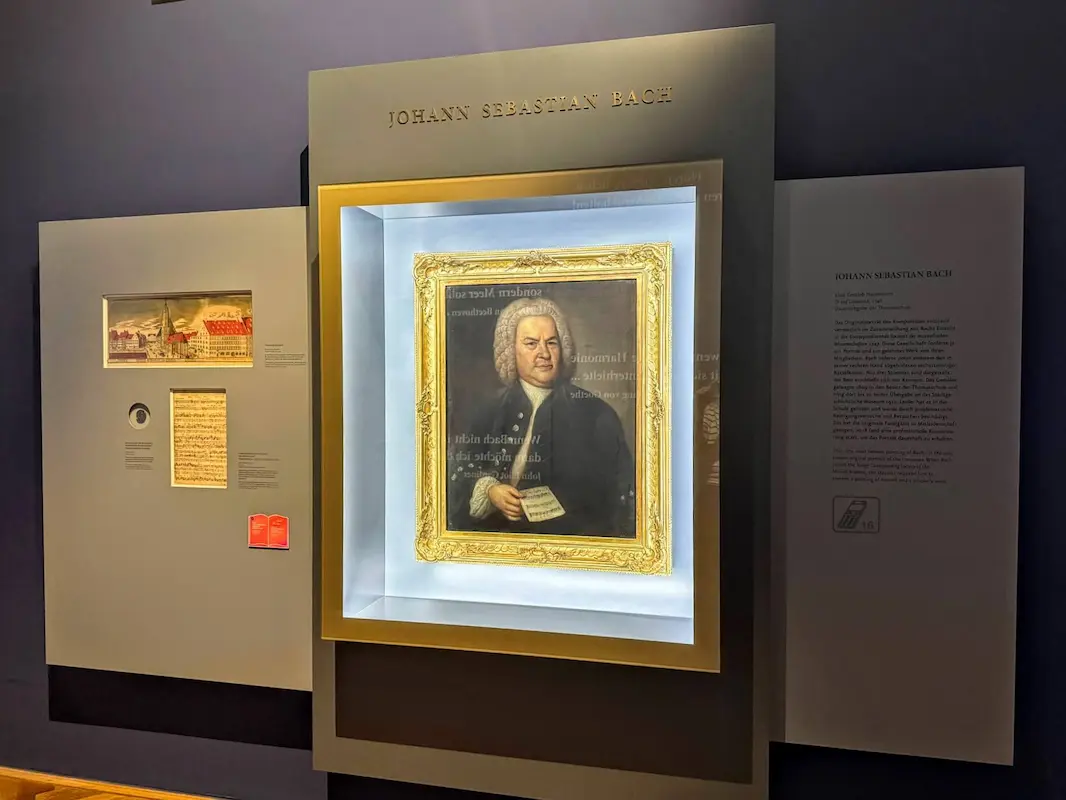
Don’t miss the stunning Ceremonial Hall, which is home to an incredible large-scale model of Leipzig as it looked in 1823. Anyone interested in the life of Johann Sebastian Bach in Leipzig should visit a small room entirely dedicated to the maestro. It contains the only known authentic portrait of J. S. Bach painted during his lifetime, created by Elias Gottlob Haussmann. Nearly every other portrait you see today is a copy of this single masterpiece.
6 – St. Nicholas Church
Address: Nikolaikirchhof 3, 04109 Leipzig
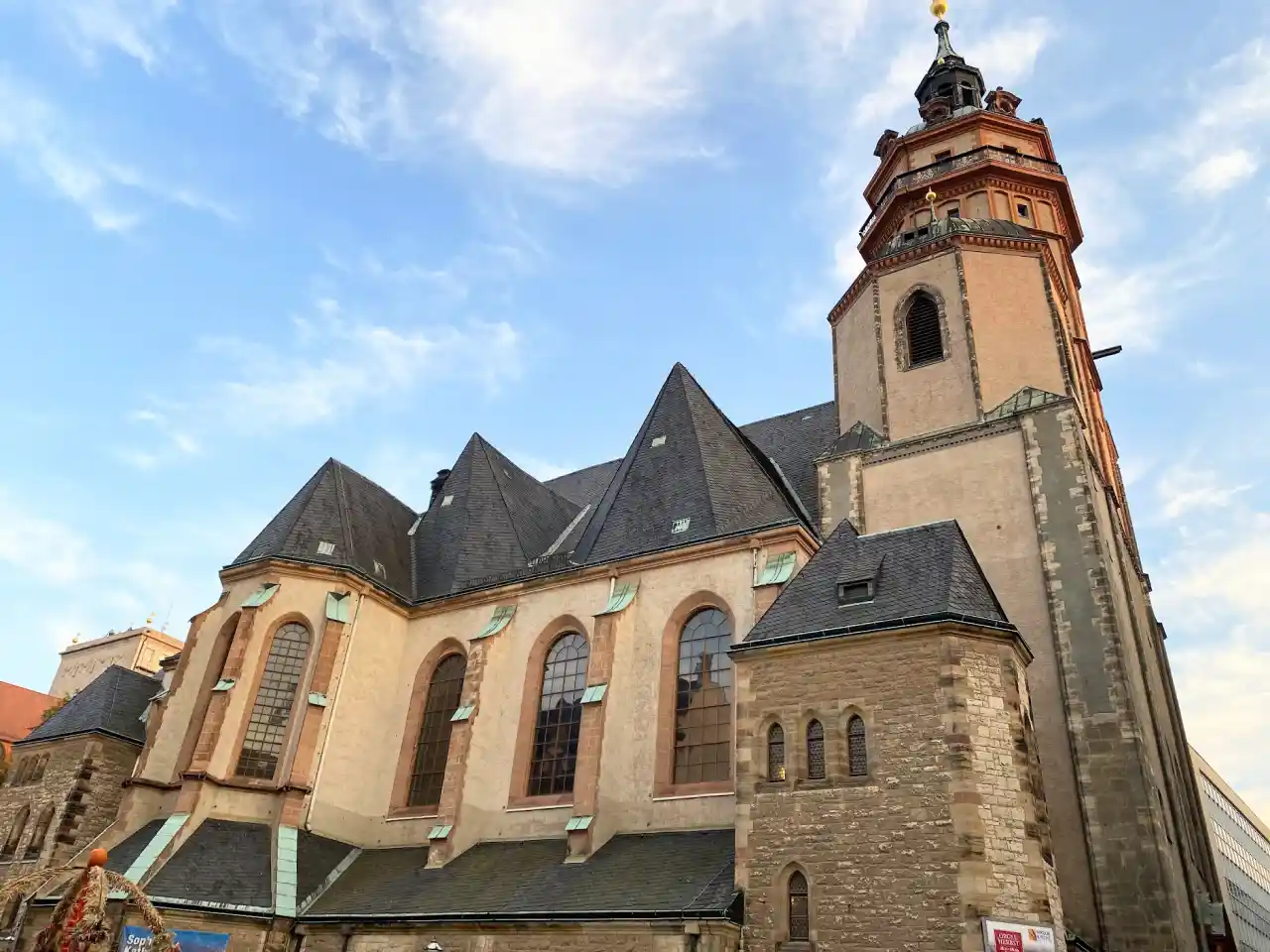
St. Nicholas Church (Nikolaikirche) is the largest church in Leipzig. It’s construction began in the Romanesque style in the 12th century, evolving over time into Gothic style with some Baroque additions. The interior is utterly unique, famous for its Classicist columns designed to look like stylised palm trees.
This church is also closely tied to Johann Sebastian Bach in Leipzig. Despite its size and importance, St. Nicholas Church never appointed its own independent music director and organist. Instead, the Thomaskantor was tasked with managing its music program as well. Consequently, Bach directed the music here between 1723 and 1750, choosing this venue to premiere many of his most significant works, including his legendary St. John Passion on Good Friday in 1724.
⤷ Read more: 20 Most Iconic Churches in Europe
7 – St. Matthew Church Monument
Address: Matthäikirchhof, 04109 Leipzig
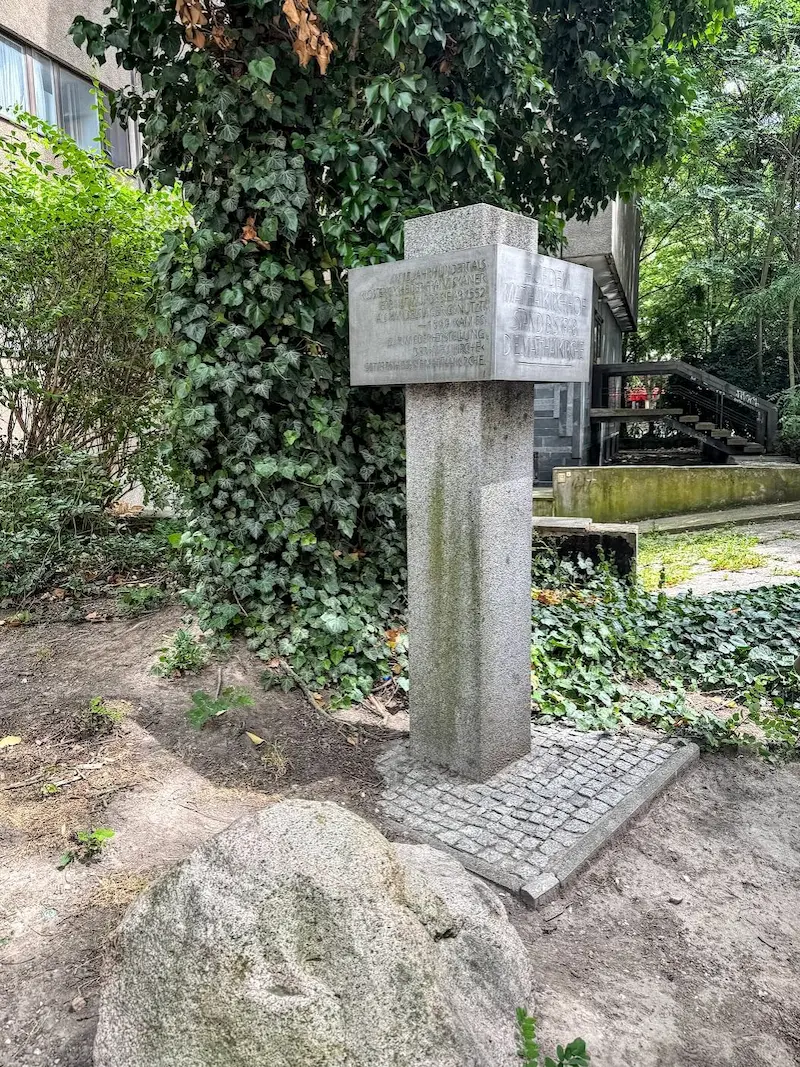
During his tenure in Leipzig, Bach was responsible for coordinating the music in four main city’s churches: St. Thomas, St. Nicholas, St. Peter, and the New St. Matthew Church.
Originally established as a Franciscan Church in 1488, St. Matthew served as a Lutheran parish from 1699. In Bach’s day, it was simply known as the New Church (Neukirche) before being renamed St. Matthew in 1876. Tragically, the building was completely destroyed during Allied bombing raids in 1943.
Even though the church used to had its own musical director, the Thomaskantor oversaw the music program since 1723, making J. S. Bach responsible for it for almost three decades. While the first two choirs of the Thomanerchor sang at St. Thomas and St. Nicholas churches, the third choir was stationed here. The building itself is gone, but a dedicated monument marks its historic location in Leipzig today.
8 – Zum Arabischen Coffe Baum
Address: Kleine Fleischergasse 4, 04109 Leipzig
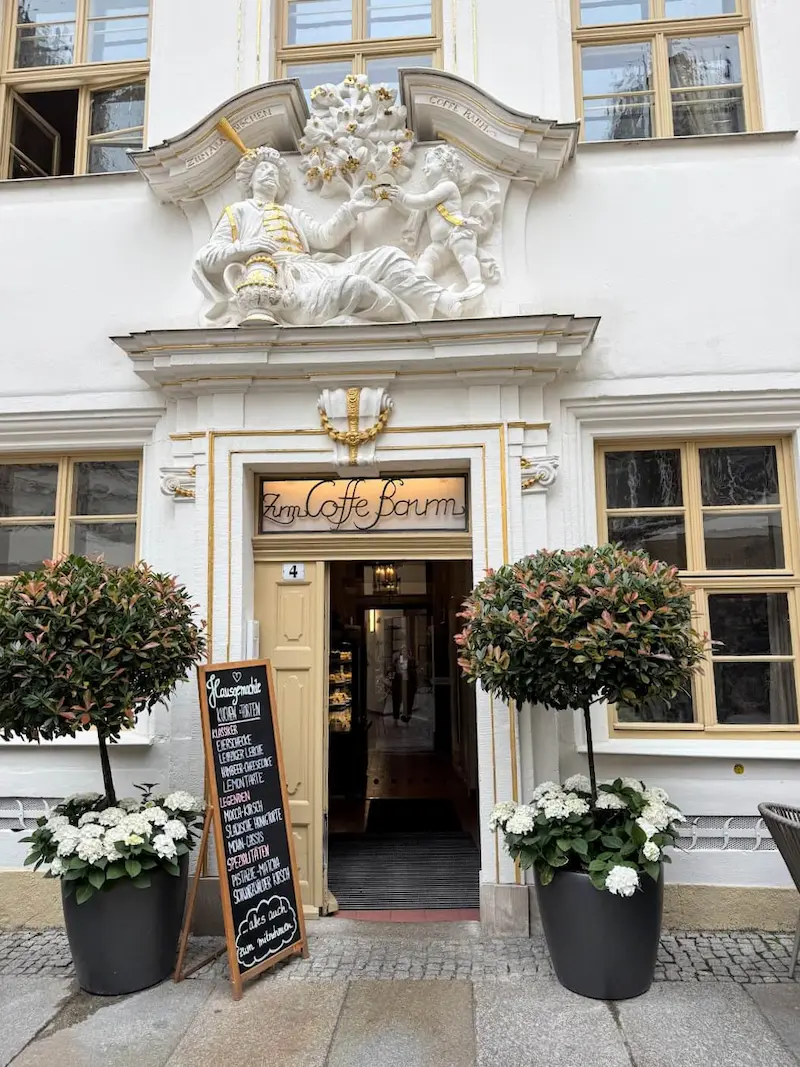
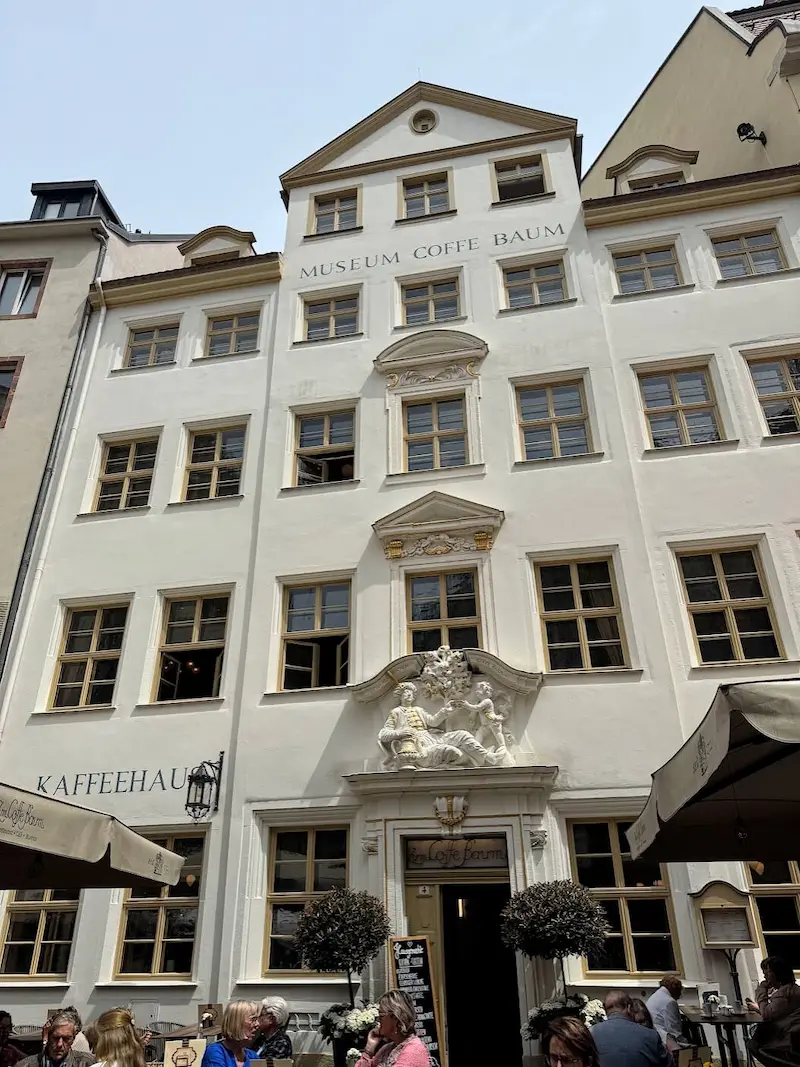
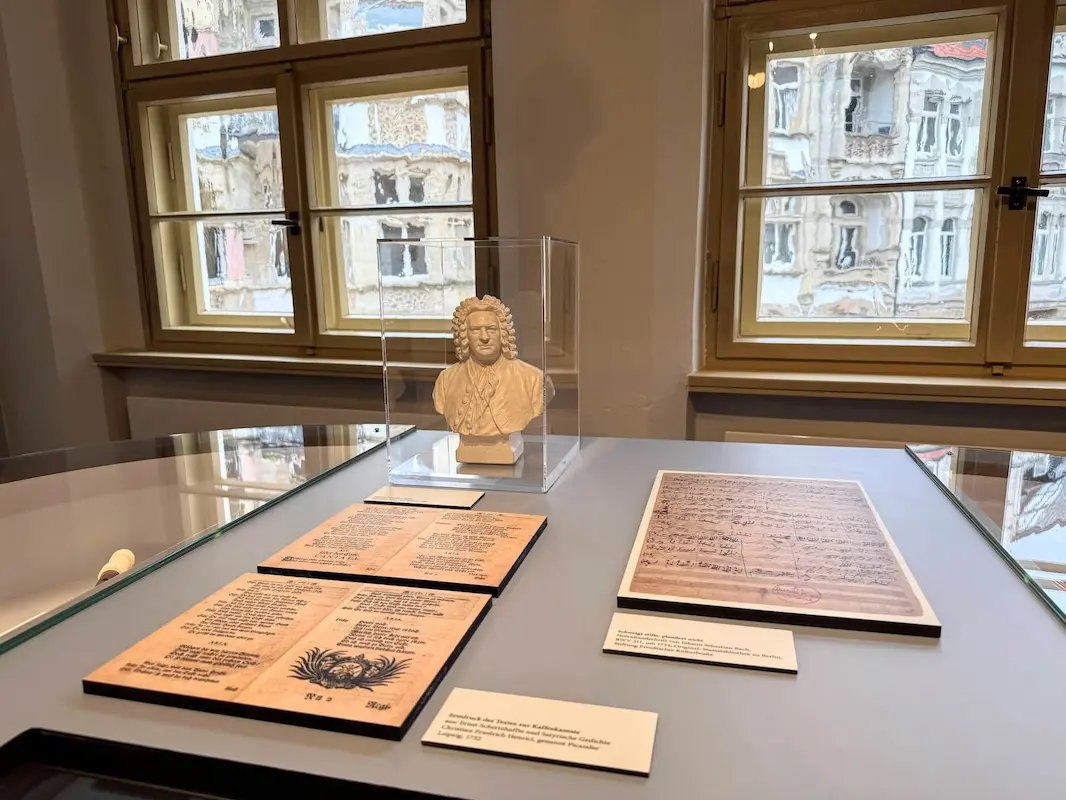

Zum Arabischen Coffe Baum is one of the oldest continuously operating coffee houses in Europe, serving guests since 1711. During the early 18th century, Europeans became entirely obsessed with coffee and chocolate, and this cafe was one of the first places in Leipzig to indulge in the trend.
The beautifully restored historical interior breathes life into the past. It is easy to imagine well-known figures from art, music, literature, and politics sipping coffee in these very rooms. While Bach wasn’t one of them, he was highly amused by the local “coffee craze,” which inspired his Coffee Cantata, one of his few non-religious pieces.
Zum Arabischen Coffe Baum was restored and reopened in 2025. After enjoying a slice of cake and a cup of coffee, head to the upper floors to explore a nice museum dedicated to coffee culture. It’s free to enter and it offers a glimpse into daily life in Leipzig during Bach’s time.
9 – GRASSI Museum of Musical Instruments
Address: Johannisplatz 5-11, 04109 Leipzig
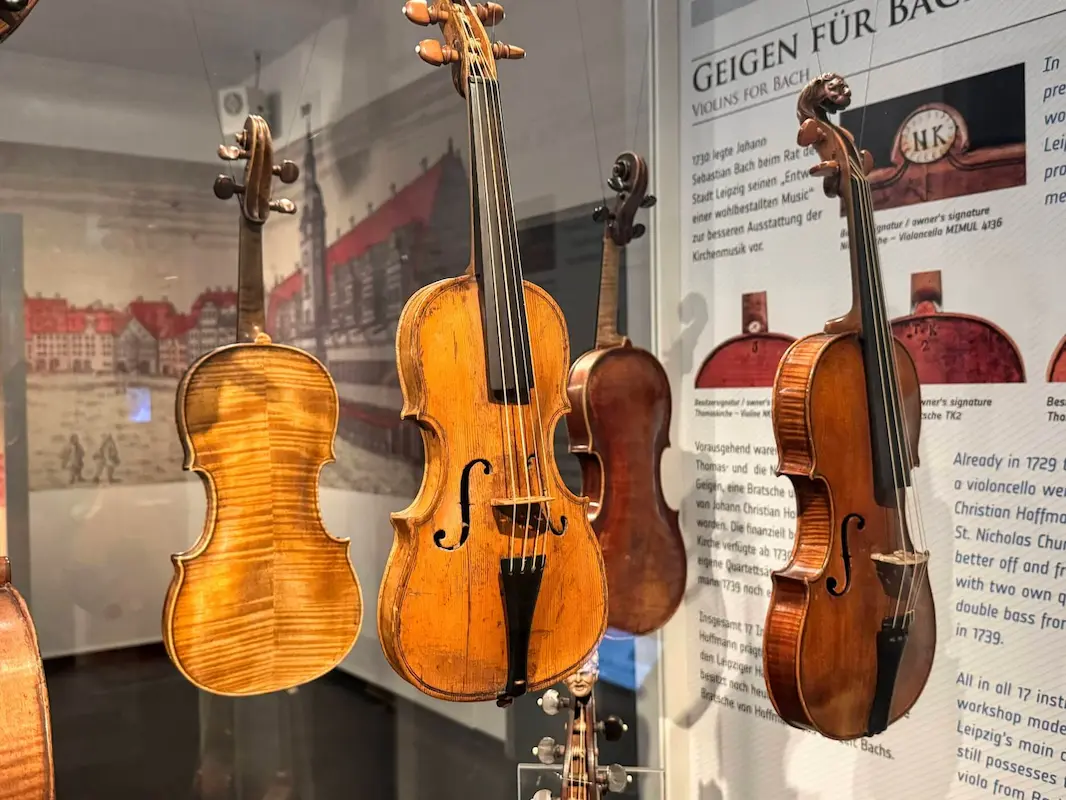
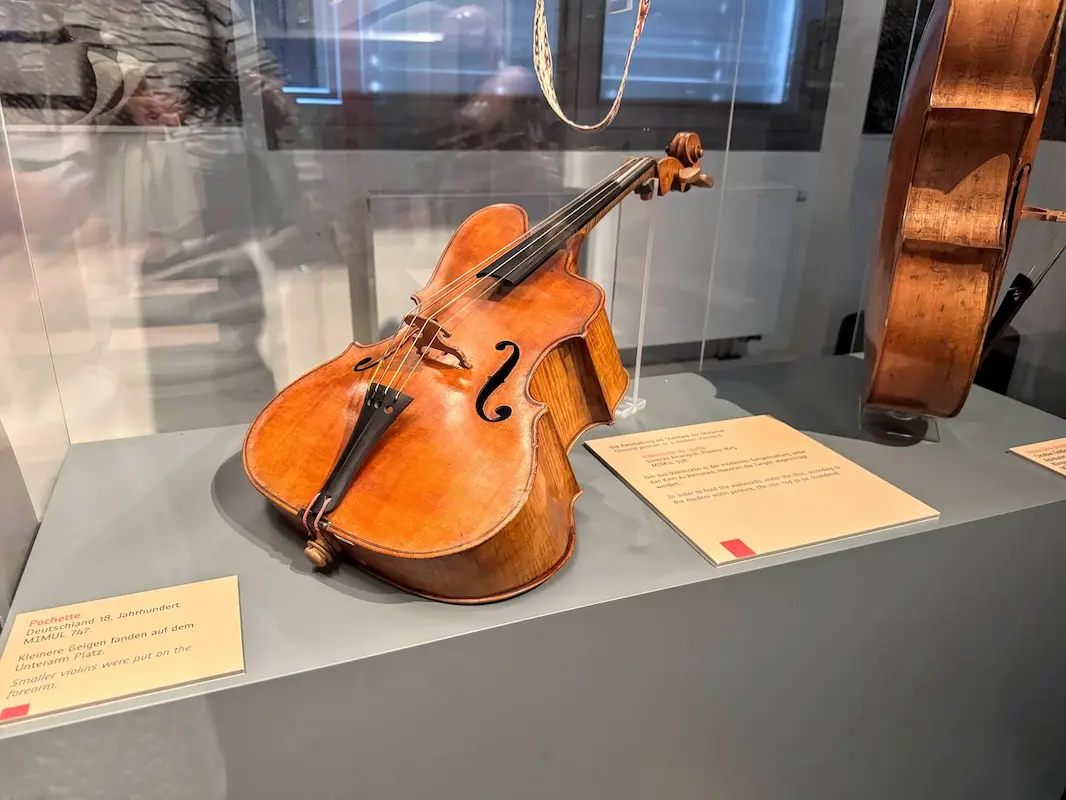
To truly immerse myself in the history of music, I spent some time exploring the GRASSI Museum. With its collection of around 10,000 pieces, it’s one of the largest musical instrument museums in Europe. It’s especially interesting for its collection of instruments from the Renaissance and Baroque time, and the exhibition dedicated to musical instruments during the Bach’s time in Leipzig.
⤷ Read more: 15 Best Museums to Visit in Europe
Where to Listen Bach’s Music in Leipzig Today
Bach’s music doesn’t belong to the past, It is still alive and regularly performed in Leipzig. During my two trips to this beautiful city, I attended several musical performances and they immersed me so much more into the Leipzig’s musical heritage.
Gewandhaus Concert Hall
Address: Augustusplatz 8, 04109 Leipzig
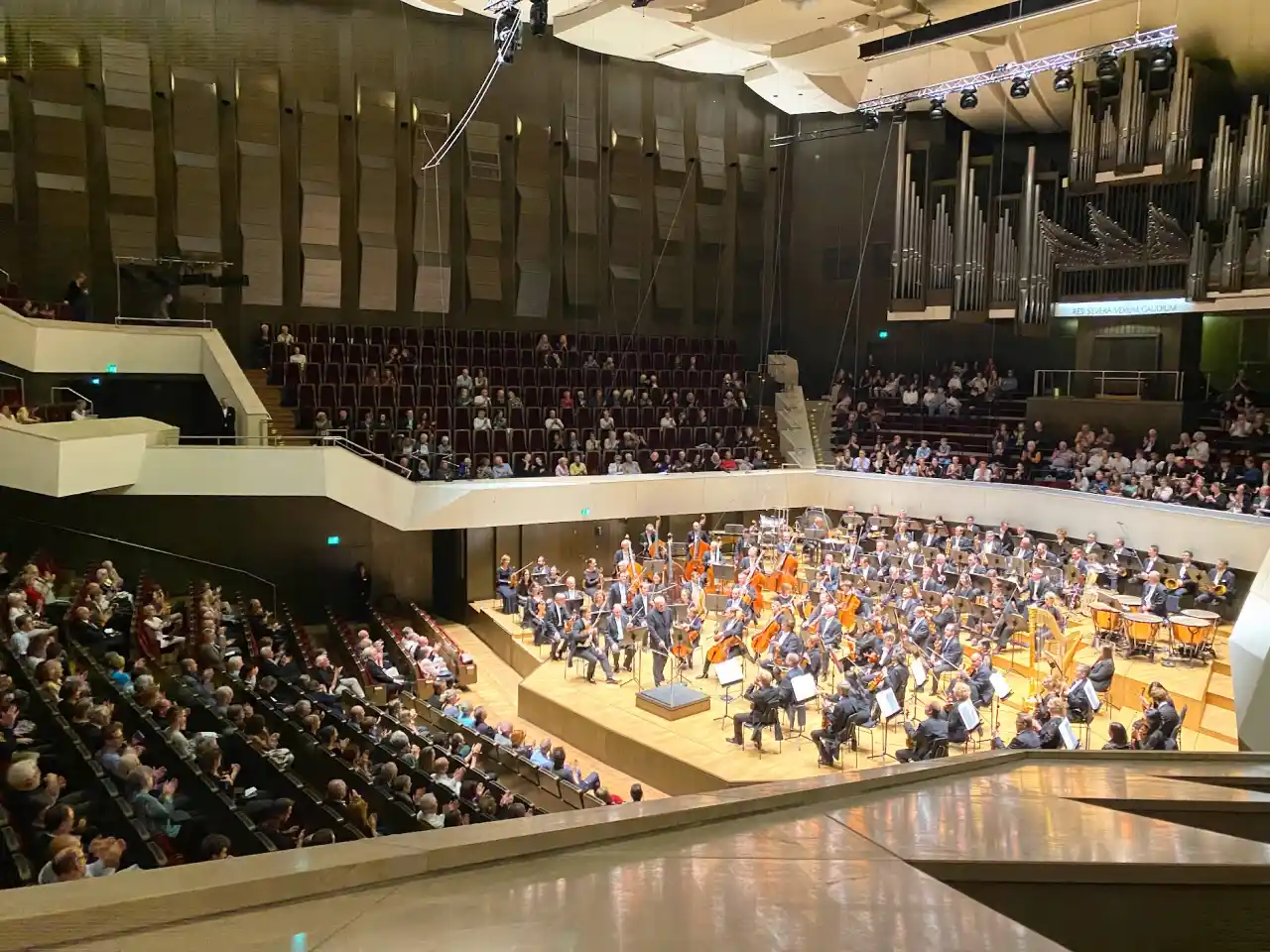
Gewandhaus Orchestra’s history goes all the way back to 1479, when the city of Leipzig appointed three musicians to play for public events. The orchestra itself was established in 1743 while Bach was living in the city. After that, they’ve got the part of the textile merchants’ trading house to use as a concert hall which gave the name to the orchestra (Gewand means garment or robe in German).
The modern Neues Gewandhaus opened its doors in 1981. Although, it remains the main venue to hear the world-renowned Gewandhaus Orchestra today, you can also hear them performing in the Opera House and St. Thomas Church.
⤷ TIP: Check what’s on and get your tickets for the Gewandhaus Orchestra performance during your visit to Leipzig via this link.
Leipzig Opera House
Address: Augustusplatz 12, 04109 Leipzig
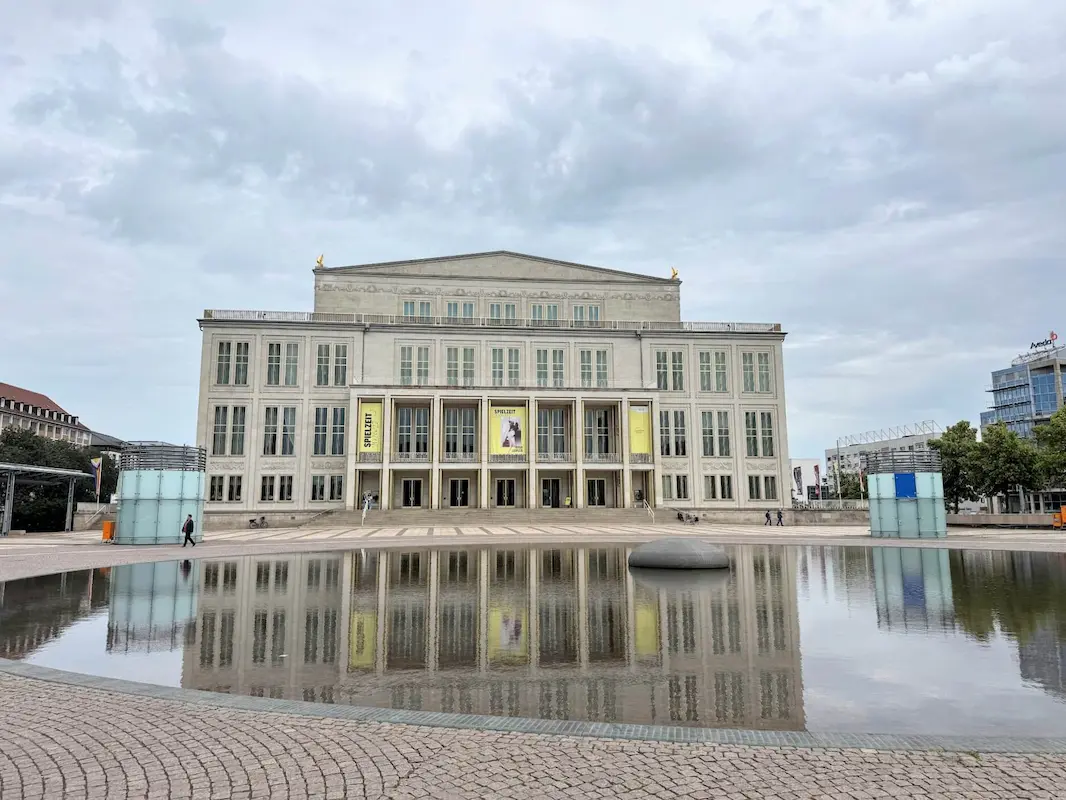
Located just across the square from the Gewandhaus, you’ll find another musical venue in Leipzig, its Opera House. Its performance history goes back to 1693. The venue does not host an independent orchestra. Instead, the Gewandhaus Orchestra acts as its resident ansamble. The current modernist Opera House opened in 1960.
⤷ TIP: Take a look at the current seasonal program and get your opera tickets at this link.
Musical Performances at St. Thomas Church
Address: Thomaskirchhof 18, 04109 Leipzig
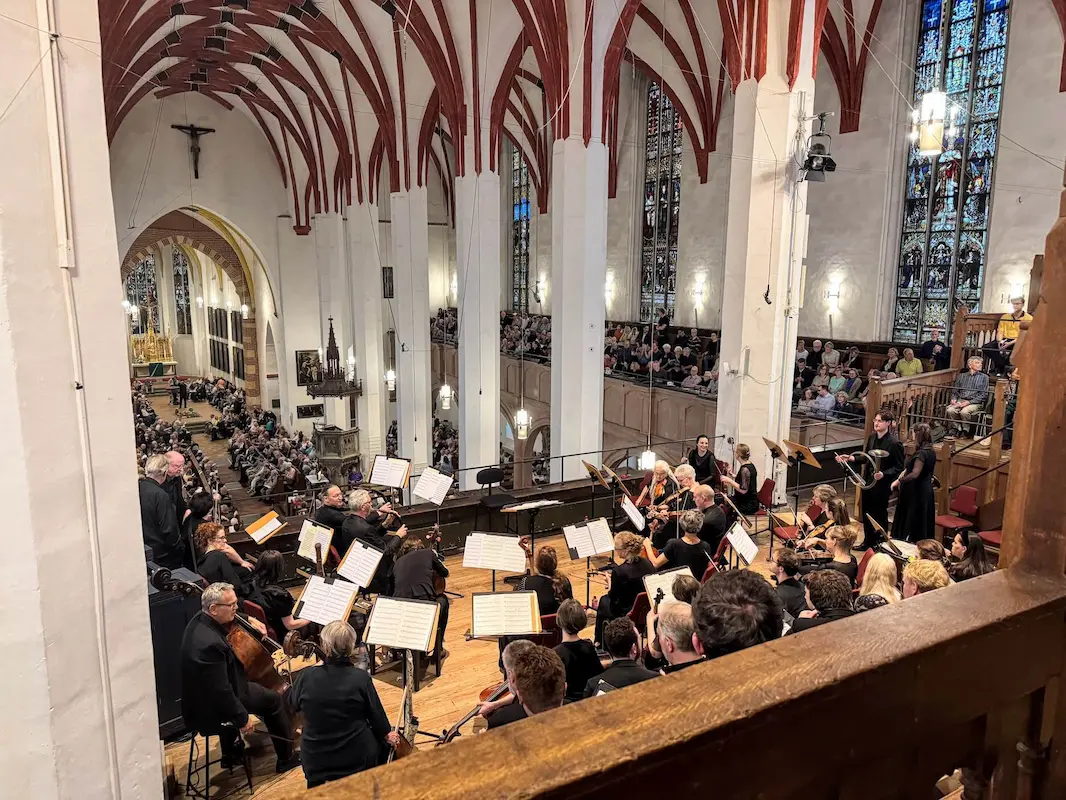
Another iconic place to listen to classical music (and the one closely linked to J. S. Bach in Leipzig) is St. Thomas Church. Every Friday at 6 pm and Saturday at 3 pm, you can listen to the legendary St. Thomas Choir perform historic motets and cantatas. The church also hosts special concert events throughout the year. You can see the full agenda at St. Thomas Church here and all the St. Thomas Choir performances on this link.
The Annual Bachfest in Leipzig
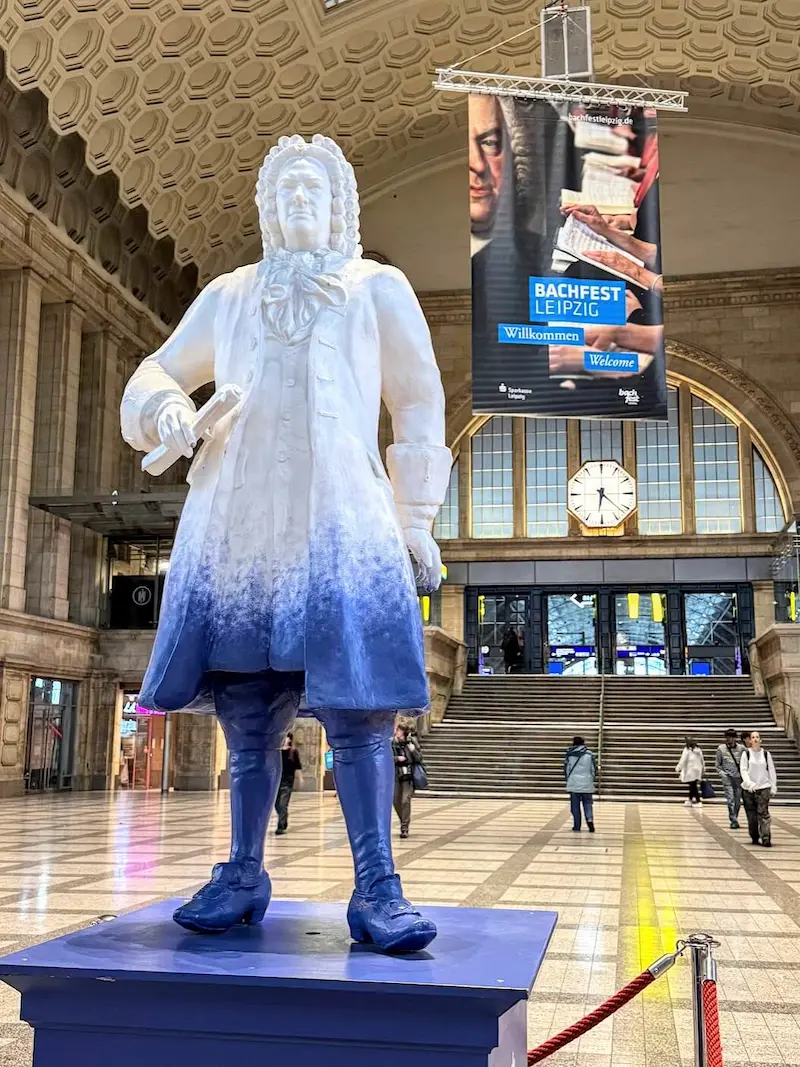
If you want the ultimate Bach experience, plan your visit around Bachfest, which takes place every year in June. Over the course of ten days, the entire city comes alive with numerous classical concerts, lectures, and special walking tours. I attended the festival in 2026 and fell completely in love with how it brings the composer’s world to life. From exploring the exact locations he frequented to hearing his masterworks echo through historic architecture of Leipzig, it was absolutely unforgettable.
⤷ TIP: Check out this link to learn more about the upcoming 2027 Bach Fest.
Tips for visiting Leipzig
Where to Stay in Leipzig
- IntercityHotel Leipzig: During my most recent visit, I stayed here and loved it! Intercity Hotel Leipzig is very conveniently located in the city centre and just a short walk from the main train station (perfect if you are arriving by rail).
- Leipzig Marriott Hotel: On a previous trip, I stayed at the Marriott and had a wonderful experience, as well. You can read my full Leipzig Marriott Hotel review here.
Where to Eat in Leipzig

One of the most surprising things about Leipzig’s culinary scene is its abundance of fantastic Vietnamese restaurants. The city has a deep historical connection to Vietnam, and every single spot I tried was absolutely delicious!
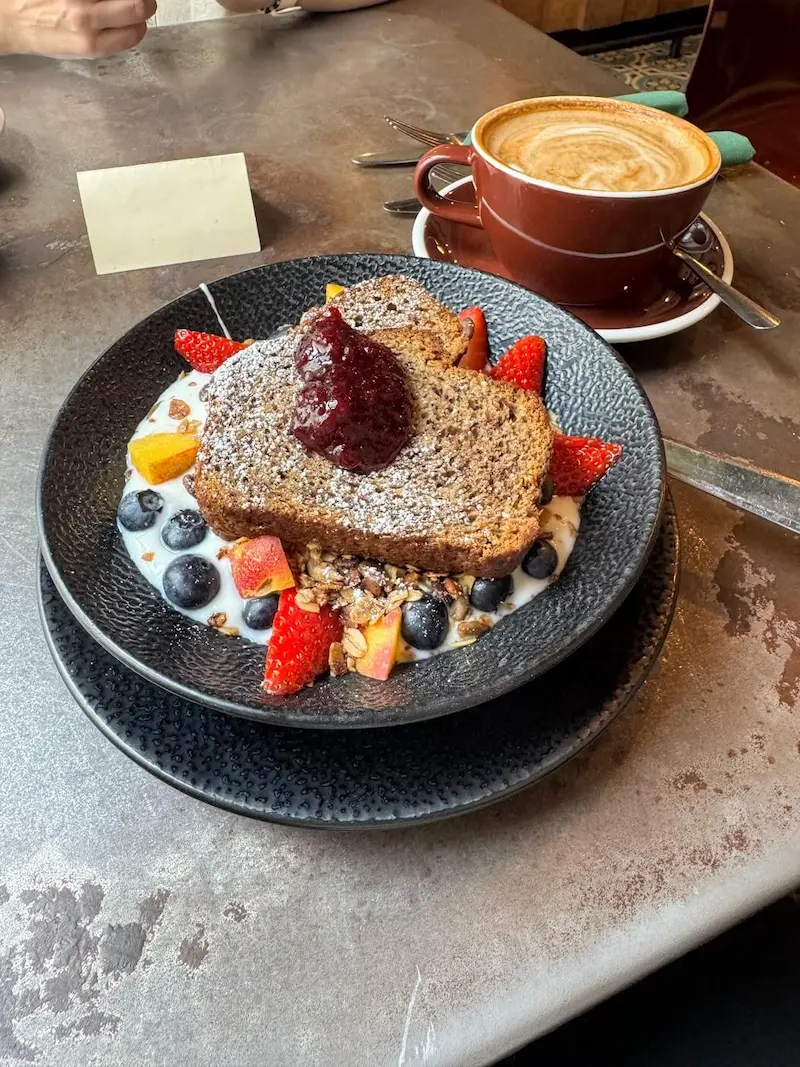
- Dankbar Kaffee: An absolute must visit for a beautifully prepared breakfast in a stunning, historic former meat shop. Check it out here!
- Café Bigoti: A charming, cosy spot that is perfect for a relaxed brunch. And it’s located right next to St. Thomas Church. Check it out here!
- Panorama Tower Restaurant: Perfect spot for dinner! Located on the top floor, it combines delicious food with a wonderful, 360 degree view of Leipzig. Check it out here!
Where to Shop & Find Unique Souvenirs in Leipzig


Leipzig is home to many cute shops selling local products or sustainable fashion brands.
- Mädler Passage: This historic arcade is home to many nice shops, beautiful architecture, and a wonderful historic atmosphere.
- Lipsi Klub: I got a recommendation for this shop during my last visit and absolutely loved it. They showcase products made by independent artists and designers, ranging from unique jewellery and clothing to beautiful posters and ceramics. Check out their Instagram profile here.
Where to buy chocolate in Leipzig

- Goldhelm Schokoladen: While it doesn’t have a direct connection to Bach (besides both being masters of their crafts), pay a visit to the Goldhelm Schokoladen shop during your visit to Leipzig. It’s a lovely, small artisanal chocolate shop filled with delicious, handcrafted treats. What makes them extra special is the beautiful illustrations on their packaging, making each bar a tiny work of art.
- Bachtaler at Kandler: If you want to get a chocolate that will be on theme with your visit to Leipzig inspired by Bach, get a Bachtaler at Kandler. It’s Leipzig’s answer to the famous Mozartkugel.
Get Leipzig Card
- With the Leipzig card, you can use public transport free of charge. It also offers free entrance or discounts to Leipzig museums, restaurants and city tours. I had it during my stay in Leipzig and made a good use of it. Read more about the Leipzig card and all the benefits on this link.
Johann Sebastian Bach is closely linked to Leipzig and his heritage is still visible on every corner of that historical city. I hope that this guide will inspire you to explore it in Bach’s footsteps.
Have you been to Leipzig or have seen any of these locations? Let me know in the comments!
I visited Leipzig on a press trip organised by the Leipzig Tourism Board in June 2026. This article is a part of the campaign “ARTISTS & Their Cities” held by Culture Tourist in 2026 and 2027. Many thanks to them and their partners for arranging a wonderful visit for me. However, as always all opinions are my own.
The post Walking in the Footsteps of Johann Sebastian Bach in Leipzig appeared first on Culture tourist.